What Is Ahrefs Backlink Checker?
Ahrefs Backlink Checker is a backlink analysis tool that shows every link pointing to a website. It scans Ahrefs’ link index, then reports who links to a page, how strong those links are, and what anchor text they use. SEO teams use it to audit their own links, study rivals, and find new link-building chances. For a deeper understanding of how agencies use this type of data in real campaigns, professional teams often rely on a trusted SEO Company Los Angeles approach.
Ahrefs runs the second most active web crawler after Google. Its bot, AhrefsBot, refreshes link data often, so the numbers stay close to live. That data depth is why the tool sits at the center of so many SEO workflows.
| Quick answer
Ahrefs Backlink Checker reports the backlinks, referring domains, and anchor text for any URL or domain. A free version gives a snapshot. Paid plans unlock full reports, filters, and competitor research. It is built for backlink audits, competitor backlink analysis, and finding link-building gaps. |
Backlinks in 30 Seconds | Why They Matter for SEO
A backlink is a link from one website to another. Think of each one as a vote of trust. When a respected site links to you, it tells search engines your page is worth reading.
Backlinks remain one of the strongest ranking signals in search. Pages with more high-quality referring domains tend to rank higher and pull more organic traffic. But quality beats raw count. Ten links from trusted, relevant sites can outweigh a hundred from spam.
This is the gap a backlink analysis tool fills. You cannot improve what you cannot see. The checker turns a messy web of links into a clear report you can act on.
How the Ahrefs Backlink Checker Works
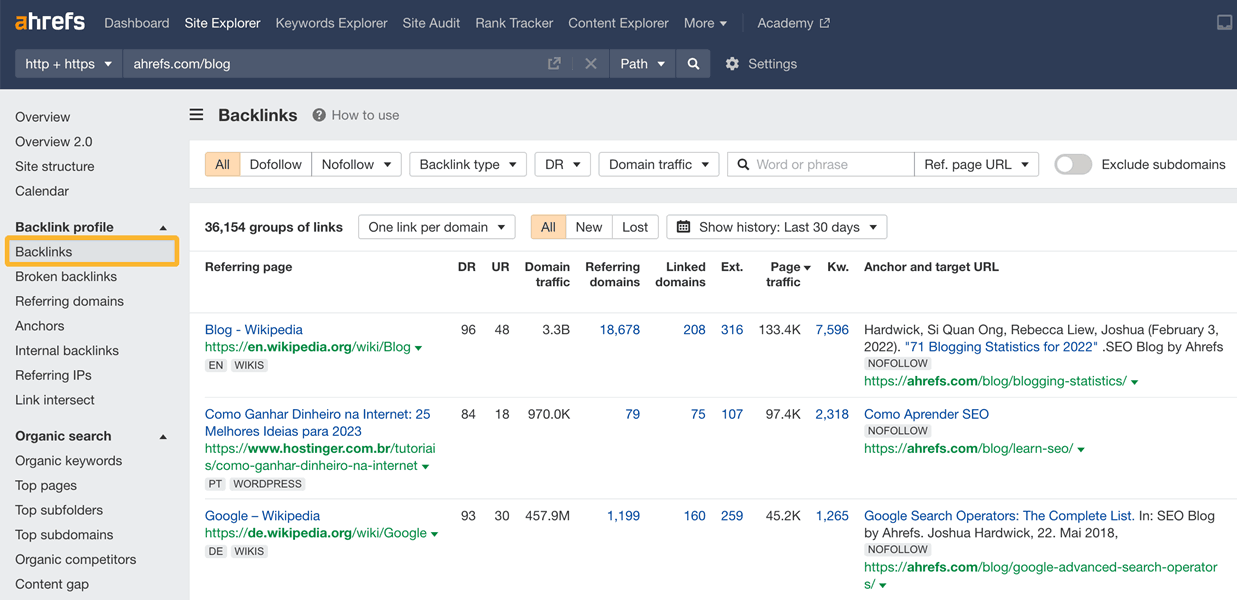
Under the hood, the tool follows four steps. Knowing them helps you trust the numbers and spot their limits. Behind similar systems, agencies often rely on structured Web Development Services to ensure websites are crawlable and SEO-friendly.
- Crawling. AhrefsBot visits billions of web pages and follows the links on each one, much like Google’s own crawler.
- Indexing. Every link it finds gets stored in a huge database, along with the source page, the anchor text, and the link type.
- Scoring. Ahrefs grades each domain and page for strength, then assigns its own metrics like Domain Rating and URL Rating.
- Reporting. When you enter a URL, the tool pulls matching records and builds a report you can sort, filter, and export.
Ahrefs maintains an index of more than 35 trillion external backlinks, one of the largest available. The data refreshes frequently, often within 15 to 30 minutes, which is faster than most rivals.
| Good to know
No third-party tool sees the entire web. Ahrefs shows links it has crawled, not links Google keeps private. Two tools can report different numbers for the same site because their crawlers and indexes differ. |
Key Ahrefs Metrics You Need to Read the Report
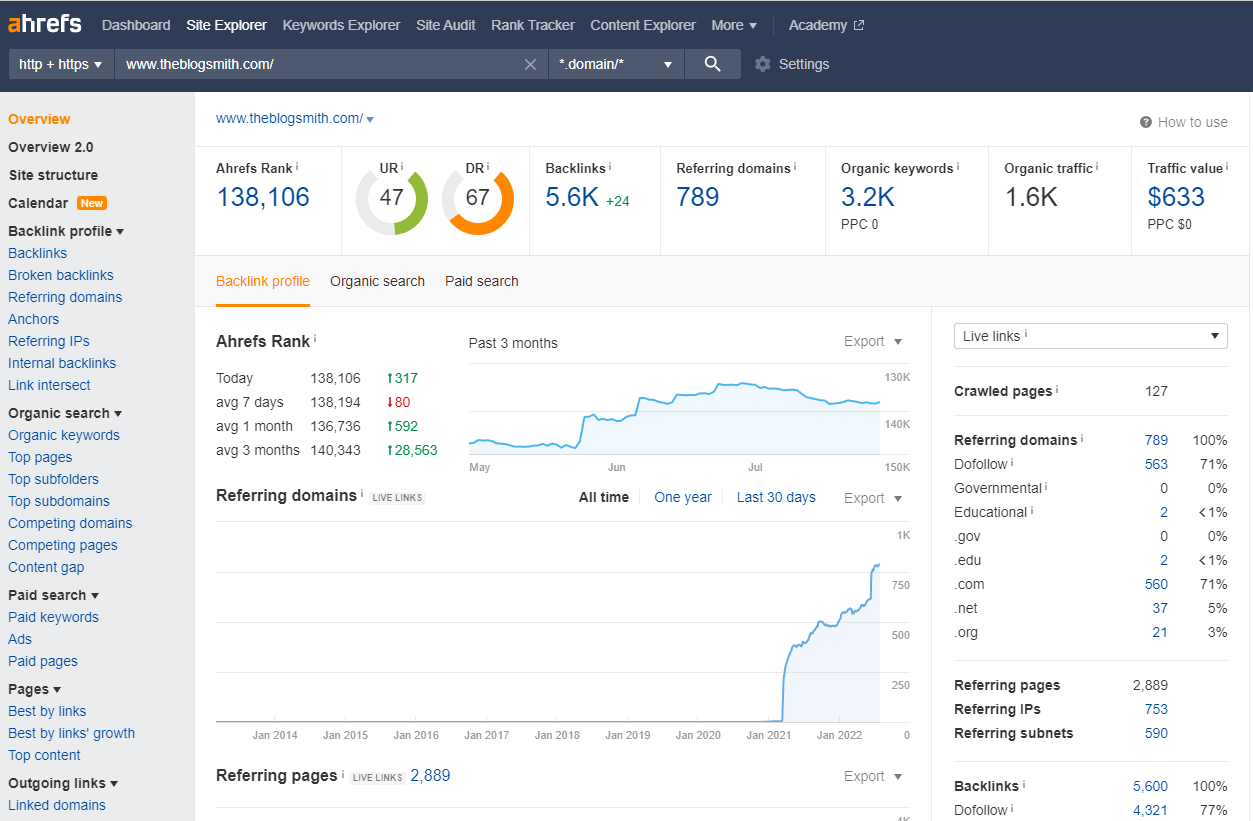
The report is only useful if you can read its scores. These are the core metrics, in plain terms.
| Metric | What it measures | Scale | How to use it |
| Domain Rating (DR) | Backlink strength of a whole website | 0 to 100, higher is stronger | Vet sites you want links from; benchmark against rivals |
| URL Rating (UR) | Backlink strength of a single page | 0 to 100, higher is stronger | Judge how hard a specific page is to outrank |
| Ahrefs Rank (AR) | Global ranking of all sites by link strength | Lower is stronger (AR 1 is the top site) | Track your long-term trajectory over time |
| Referring domains | Count of unique sites linking to a target | Whole number | Often matters more than total backlinks |
| Backlinks | Total count of links, including repeats | Whole number | Watch the trend, not just the size |
| Anchor text | The clickable words inside each link | Text distribution | Spot over-optimization or negative SEO |
One trap to avoid: DR, UR, and AR are Ahrefs metrics, not Google ranking factors. They correlate with rankings, but Google does not use them. A high DR signals potential. It does not promise a top spot.
DR vs UR, in one line: DR rates the whole site; UR rates one page. A link from a UR 60 page on a DR 40 site can beat a link from a UR 12 page on a DR 75 site. Page-level strength often wins.
Free vs Paid: What You Actually Get
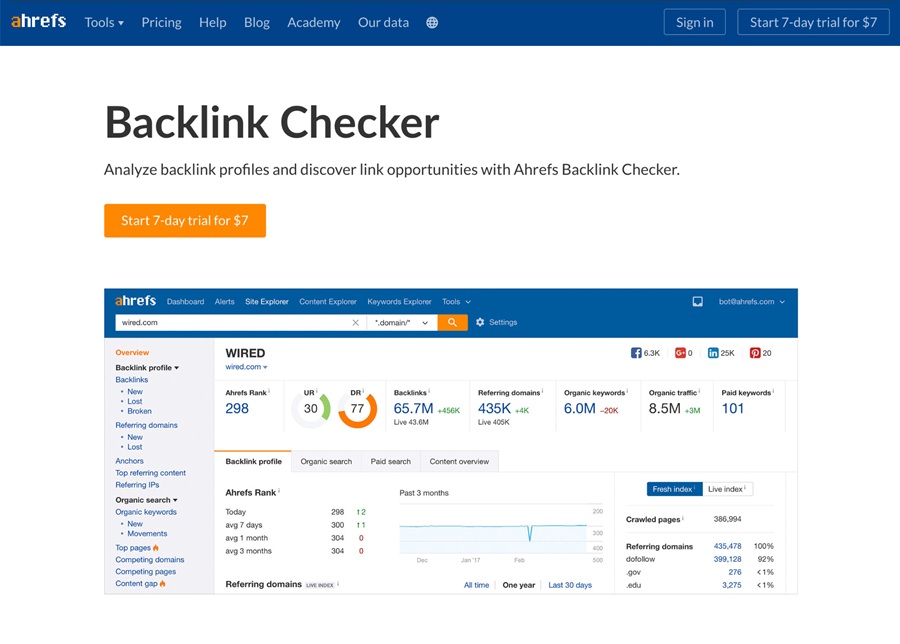
Ahrefs offers a free Backlink Checker at ahrefs.com/backlink-checker. Enter any domain and you see top backlinks, referring domains, and DR. It is a fast snapshot, capped at a limited number of results.
For deeper work you need an account. In January 2026 Ahrefs reworked its plans. The lineup now runs from free tools up to enterprise.
| Access level | Cost (approx.) | Competitor research? | Best for |
| Ahrefs Webmaster Tools | Free | No, verified sites only | Owners auditing their own site |
| Free Backlink Checker | Free | Limited snapshot | A quick one-off link check |
| Starter | About $29 / month | Yes, light usage | Beginners and single projects |
| Lite | About $129 / month | Yes | Freelancers and small teams |
| Standard | About $249 / month | Yes, no credit cap | Agencies and content teams |
Note: Ahrefs no longer runs a traditional 30-day free trial. The free tools and the $29 Starter plan are the low-risk ways to test it. Always confirm current prices on the official pricing page, since tiers change.
How to Check Backlinks with Ahrefs (Step by Step)
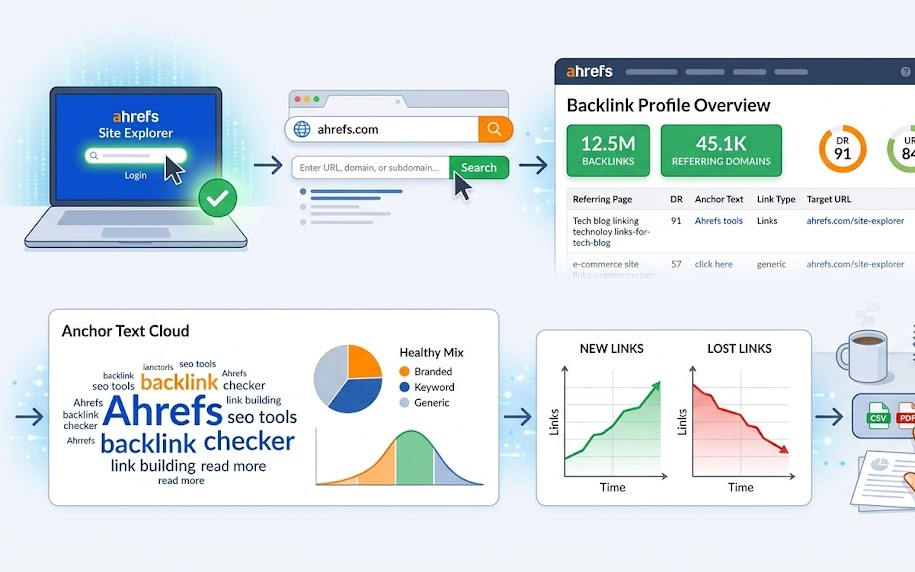
Here is the simple workflow to run a backlink audit on any site, including your own.
1. Open the tool. Go to the Ahrefs Backlink Checker or log in to Site Explorer for the full version.
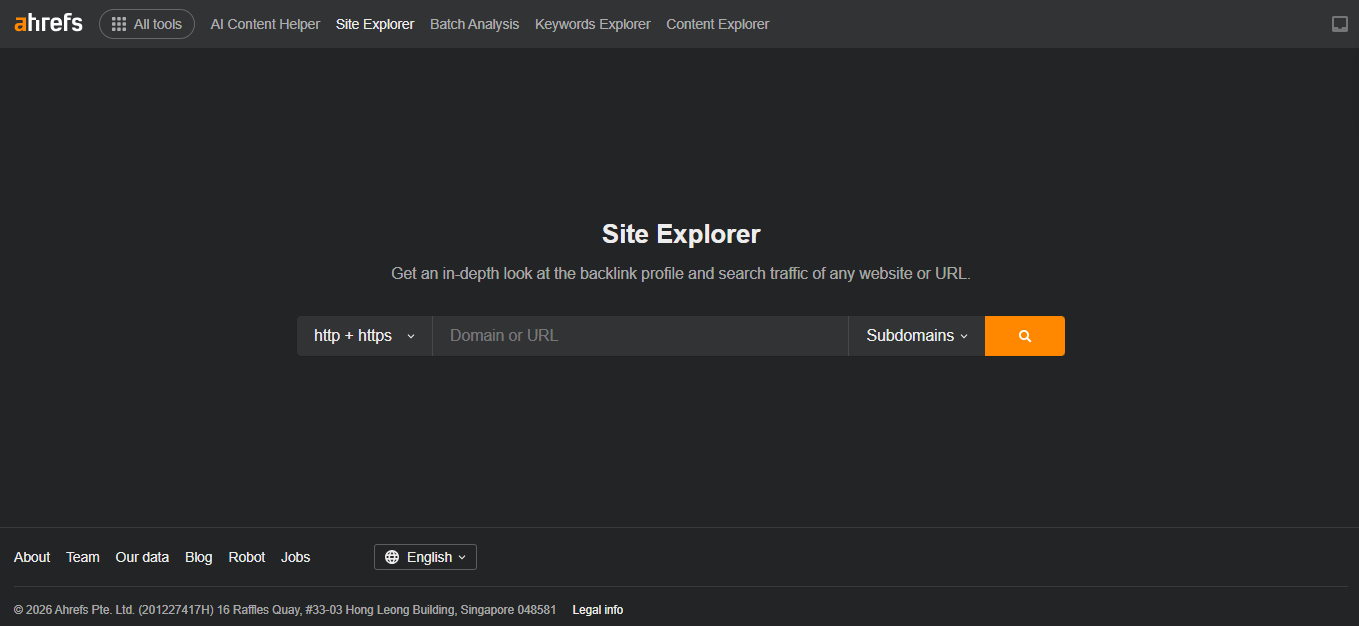
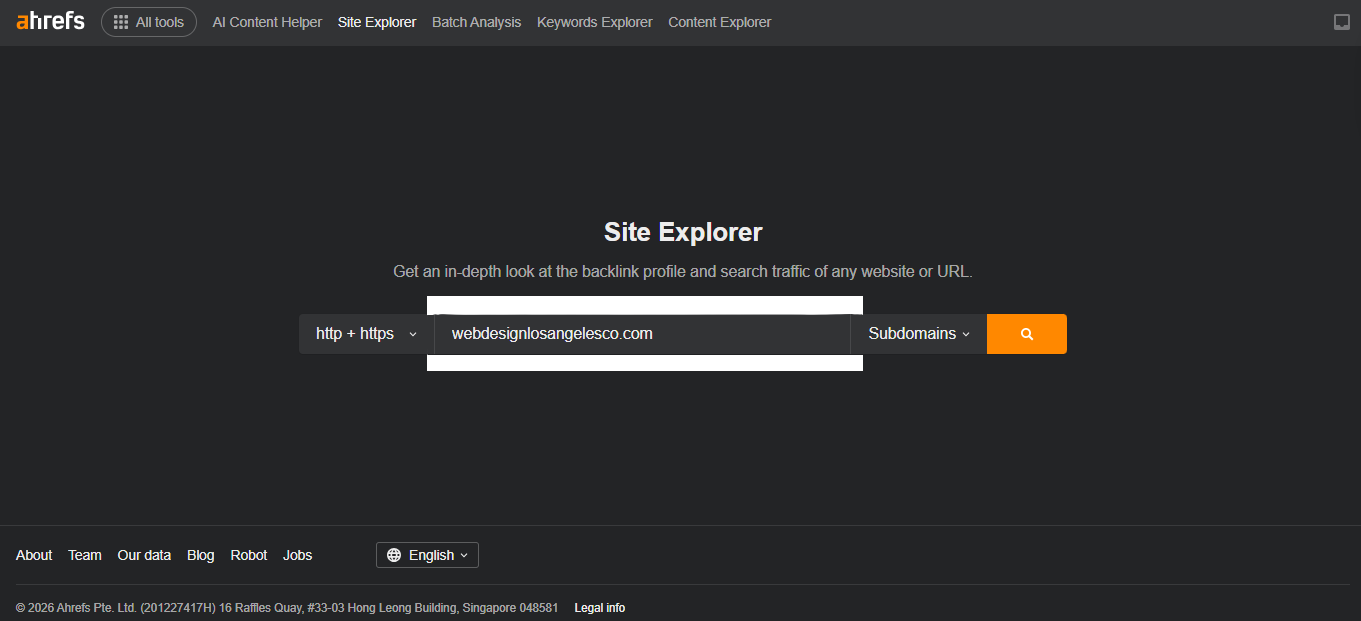
2. Enter a URL. Type a domain, subdomain, or exact page. Choose whether to analyze the whole domain or one URL.
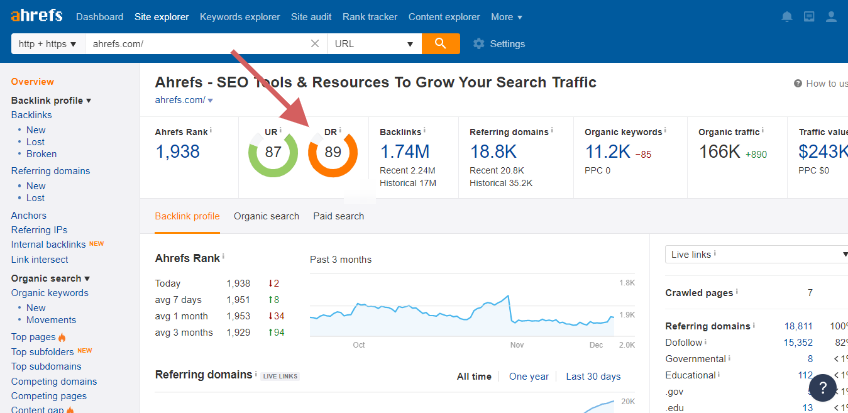
3. Read the overview. Check the headline numbers: backlinks, referring domains, DR, and UR.
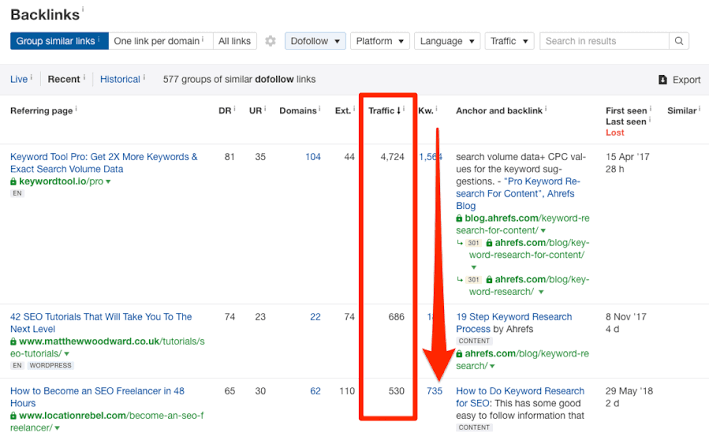
4. Open the Backlinks report. See every linking page, its DR, the anchor text, and the target URL.
5. Study anchor text. Open the Anchors report. A natural mix of branded, keyword, and generic anchors is healthy.
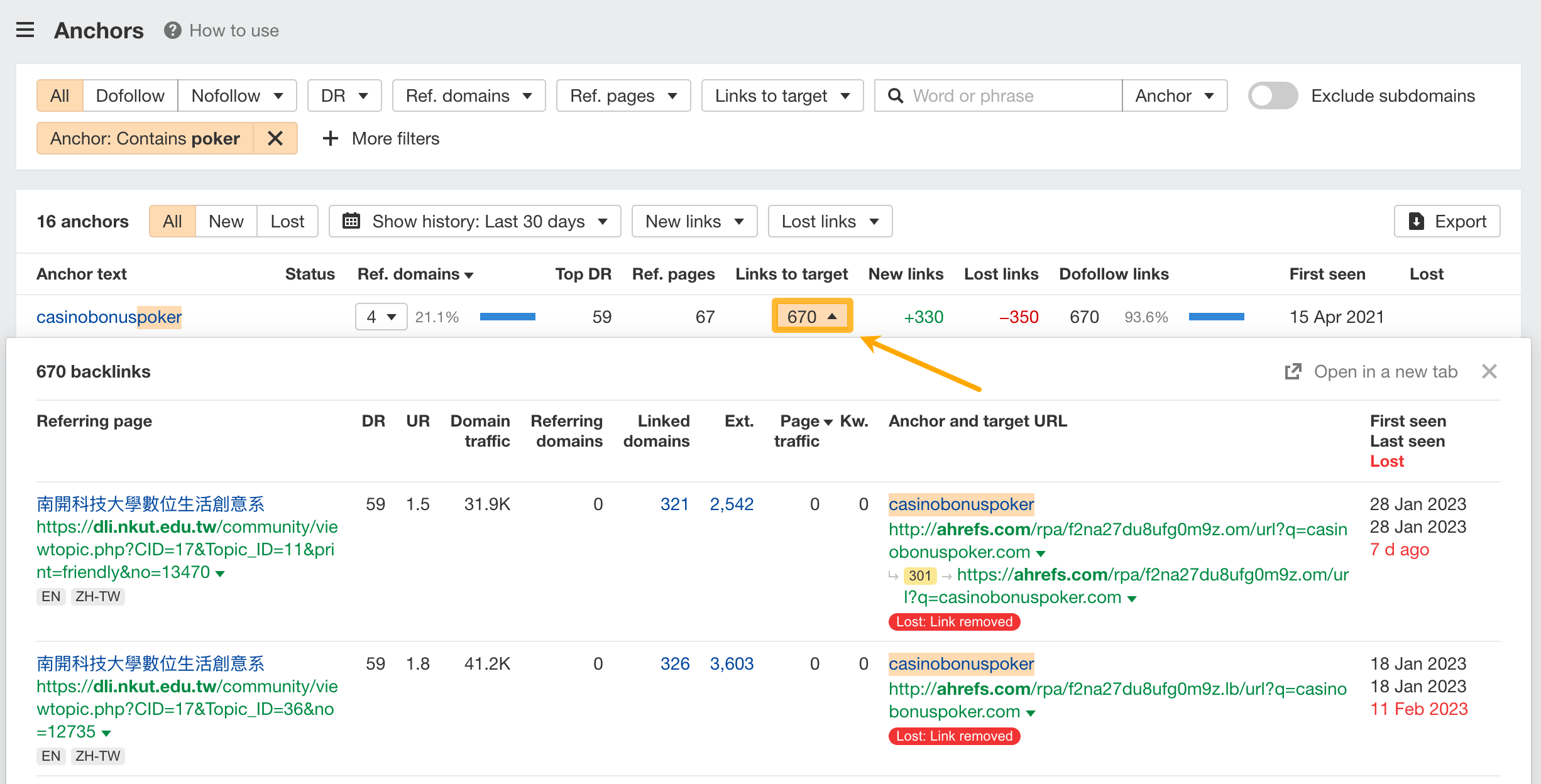
6. Track new and lost links. Use the New and Lost tabs to watch trends in your link profile.
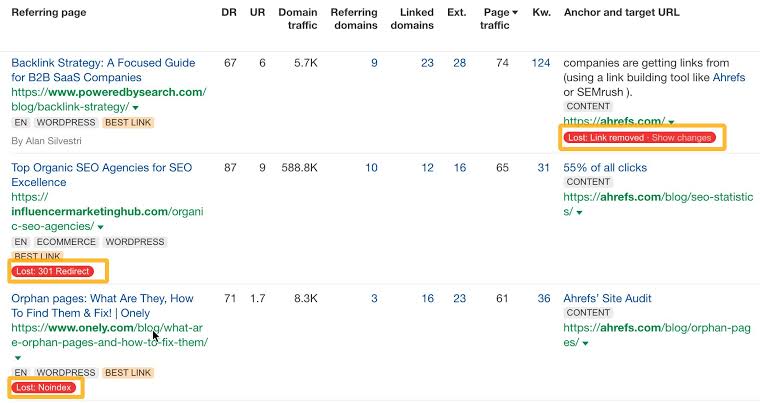
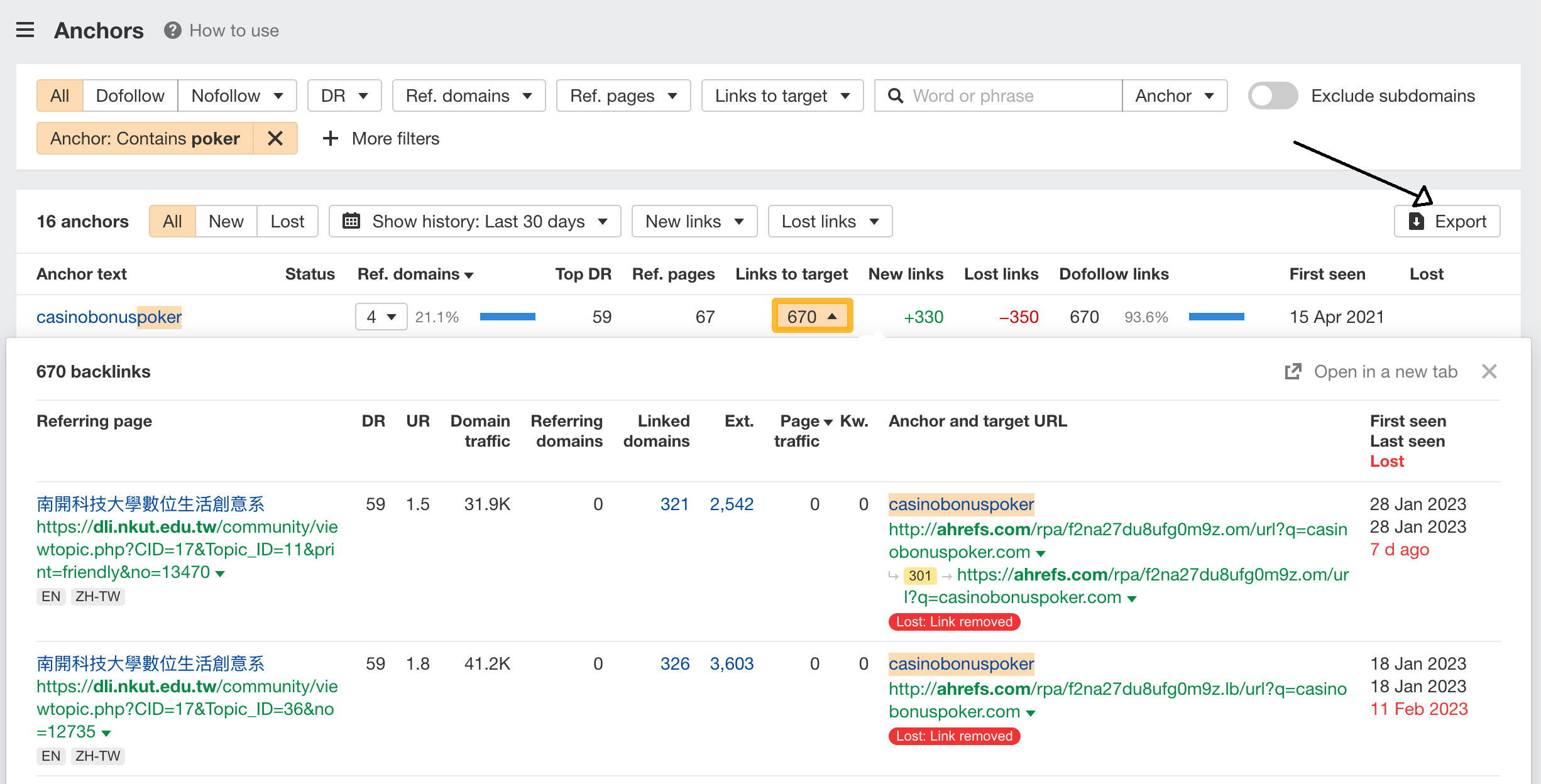
7. Export the data. Download to CSV or PDF to plan outreach or build a disavow file.
Competitor Backlink Analysis | The Real Power Move
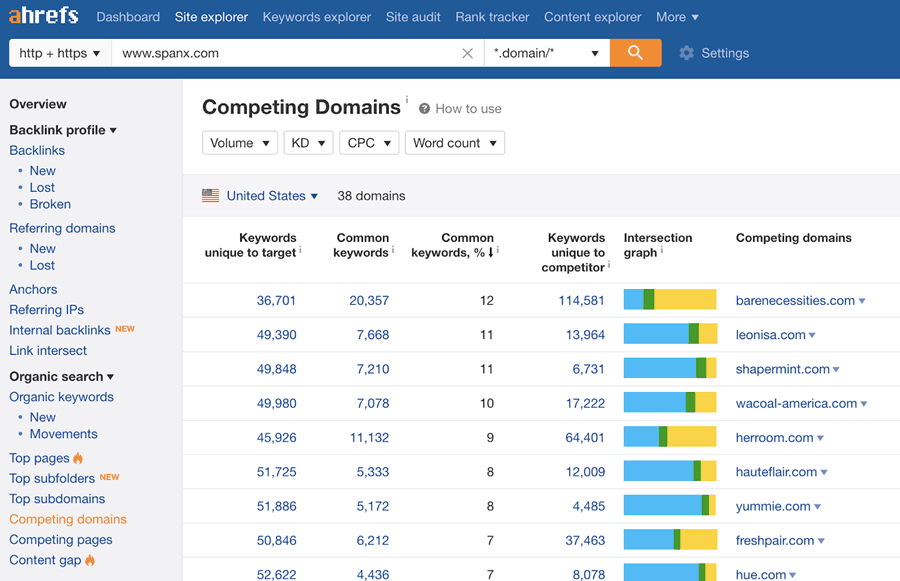
This is where the tool earns its price. Competitor backlink analysis means studying who links to your rivals so you can win the same links, or better ones.
Here is a practical filter workflow that separates casual users from pros. Enter a competitor in Site Explorer, open the Backlinks report, then narrow the noise:
- Filter by Dofollow. These pass link equity. Nofollow, UGC, and sponsored links do not, so set them aside first.
- Set DR to 30 or higher. This trims most low-value domains in one move.
- Add a traffic floor of 1,000 visits a month. Links on pages with real traffic tend to be real editorial links.
- Sort by first seen. Spot the newest links your rival earned, then reverse-engineer the campaign behind them.
Then find the gap. Use the Link Intersect or Content Gap report to list sites that link to two rivals but not to you. That list is your outreach roadmap.
| Pro tip: claim stolen images
Search the Backlinks report for .png or .jpg in the target URL. If people use your charts or graphics without a link, reach out and ask for credit. It is one of the fastest links to earn. |
A Quick Worked Example
Say you run a small coffee gear store and want to outrank a rival. You drop their domain into Site Explorer and open Best by Links. You see their top link magnet is a guide titled “How to Brew Pour-Over Coffee,” which has earned links from 80 referring domains.
You then filter those 80 domains for dofollow links from DR 30+ sites with real traffic. That leaves 25 strong, reachable targets. Many are food blogs that linked to the guide as a helpful resource.
Your move is clear: publish a better guide, add an original brewing-ratio chart, and reach out to those same 25 blogs. You are not guessing. You are copying a proven path and improving on it. That is competitor backlink analysis in action.
What You Can Do With a Backlink Audit
A backlink audit is a health check of your link profile. Run one every quarter. Here is what it surfaces:
- Toxic links. Spot spammy or irrelevant domains. If you see a manual penalty or clear spam, build a disavow file and submit it to Google with care.
- Broken backlinks. Find links pointing to dead pages on your site, then redirect them to reclaim lost equity.
- Your best pages. The Best by Links report shows which pages attract the most links, so you can make more like them.
- Anchor text risk. Too many exact-match keyword anchors can look manipulative. Aim for variety.
- Broken link building. Use the 404 filter on a rival’s site to find dead pages with many links, then offer your page as the replacement.
Ahrefs vs Other Backlink Checkers
Ahrefs is widely seen as the benchmark for link data depth. Still, it helps to know how it compares before you commit.
| Tool | Strength | Watch-out | Best for |
| Ahrefs | Largest live link index; fast refresh | Premium price; no full free trial | Serious backlink and competitor work |
| Semrush | Strong all-in-one with PPC tools | Smaller backlink index | Teams that also need paid-search data |
| Moz Link Explorer | Clean Domain Authority metric | Less frequent crawl | Simple authority checks |
| Majestic | Trust Flow and Citation Flow metrics | No keyword research | Specialist link analysis |
| Ubersuggest | Budget friendly and beginner ready | Lighter data | Small sites and first-time users |
Bottom line: if backlinks drive your strategy, Ahrefs is hard to beat on data. If budget is tight or you mainly need paid-search tools, a lighter or broader tool may fit better.
Honest Limitations to Keep in Mind
- No mobile app. Full analysis needs the desktop interface.
- Built-in outreach is limited. You export data and run outreach in another tool.
- Credit limits on lower plans. Heavy research can burn through Starter and Lite credits fast.
- Metrics are proxies. DR and UR estimate strength. They are guides, not guarantees.
Who Should Use Ahrefs Backlink Checker?
The tool fits a wide range of users, but the value differs by role.
- Beginners. Start with the free checker to learn how links shape rankings. The snapshot is enough to grasp the basics before you pay.
- Bloggers and small site owners. Use the Starter plan to track your own links and study one or two rivals without a big spend.
- Marketers. Tie backlink data to content. Find which pages earn links, then plan more of the same.
- Agencies. Manage many client sites, run batch audits, and prove link growth to clients with clear reports.
Common Mistakes to Avoid
These slip-ups waste budget and lead to weak decisions. Watch for them.
- Chasing DR as the goal. DR is a signal, not a target. Focus on earning relevant links, and the score follows.
- Judging links by count alone. A thousand weak links can matter less than fifty strong ones. Weigh quality and relevance.
- Disavowing too freely. Most spam links are ignored by Google on their own. Only disavow when you see a real pattern of harm or a manual action.
- Ignoring anchor text balance. A flood of exact-match keyword anchors can trigger spam filters. Keep the mix natural.
- Auditing once and stopping. Link profiles shift. New links appear, old ones drop. Make the audit a habit, not a one-off.
Frequently Asked Questions
Is the Ahrefs Backlink Checker free?
There is a free version that shows a limited snapshot of top backlinks and DR for any site. Full reports, filters, and competitor research need a paid plan, which starts around $29 a month.
How accurate is Ahrefs backlink data?
It is among the most accurate available, thanks to a huge index and frequent refresh. No tool sees every link, though, so treat the numbers as a strong estimate, not a perfect census.
Can I check a competitor’s backlinks?
Yes. Enter their domain in Site Explorer to see their referring domains, anchor text, and top linked pages. This requires a paid plan for full data.
What is a good Domain Rating?
DR is relative, so there is no fixed target. A local business may dominate at DR 15 to 20. A national brand may need DR 50 to 70. Compare against your direct rivals.
Does a high DR guarantee top rankings?
No. DR is an Ahrefs metric, not a Google ranking factor. It signals link strength, but content quality, page authority, and relevance all still decide rankings.
How often should I run a backlink audit?
A full audit each quarter works for most sites. During an active link campaign, check new and lost links weekly to catch issues early.
Final Word
Ahrefs Backlink Checker turns the hidden web of links into a clear, usable report. It shows who links to you, who links to your rivals, and where the open chances sit.
But data alone builds nothing. The value comes from action: fix broken links, prune toxic ones, study competitor profiles, and earn fresh links from trusted sites. Do that with a quality-first mindset and your rankings, traffic, and brand authority grow together.